Hakose Koubou in Wajima (Continued) – 箱瀬工房 –

Mr. Junichi Hakose(箱瀬淳一) at his workshop Hakose Koubou in Wajima. (photo copyright: Kogei Styling)

It was late September when we visited Master Junichi Hakose (箱瀬淳一) at his work shop, Hakose Koubou (箱瀬工房) in Wajima (輪島), Ishikawa-prefecture.

Junichi Hakose 箱瀬淳一 Hakose Koubou  箱瀬工房 
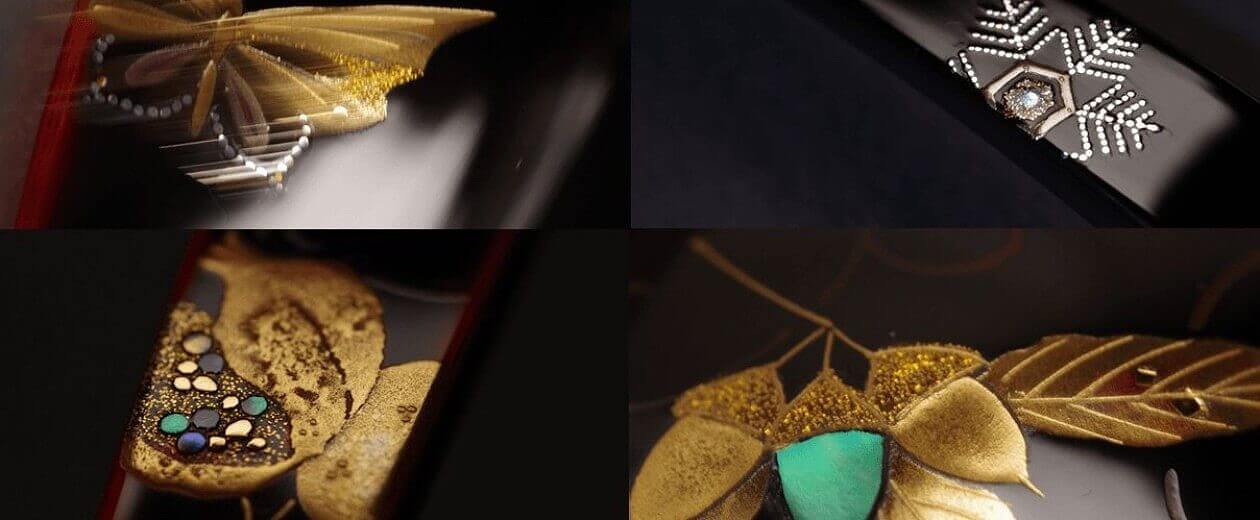
Mother of pearls “Raden(螺鈿)” work made on the lid of large sake vessel.

At that time, he was extremely busy preparing for the coming exhibition at WAKO Ginza, Tokyo, which will be the one of the largest exhibition in his life time.  He plans to exhibit his works of more than 600 pieces, basically all newly created for the exhibition.

The WAKO exhibition is schedule to be held in Nov.21(Sat)  – Nov.30(Mon) this year.
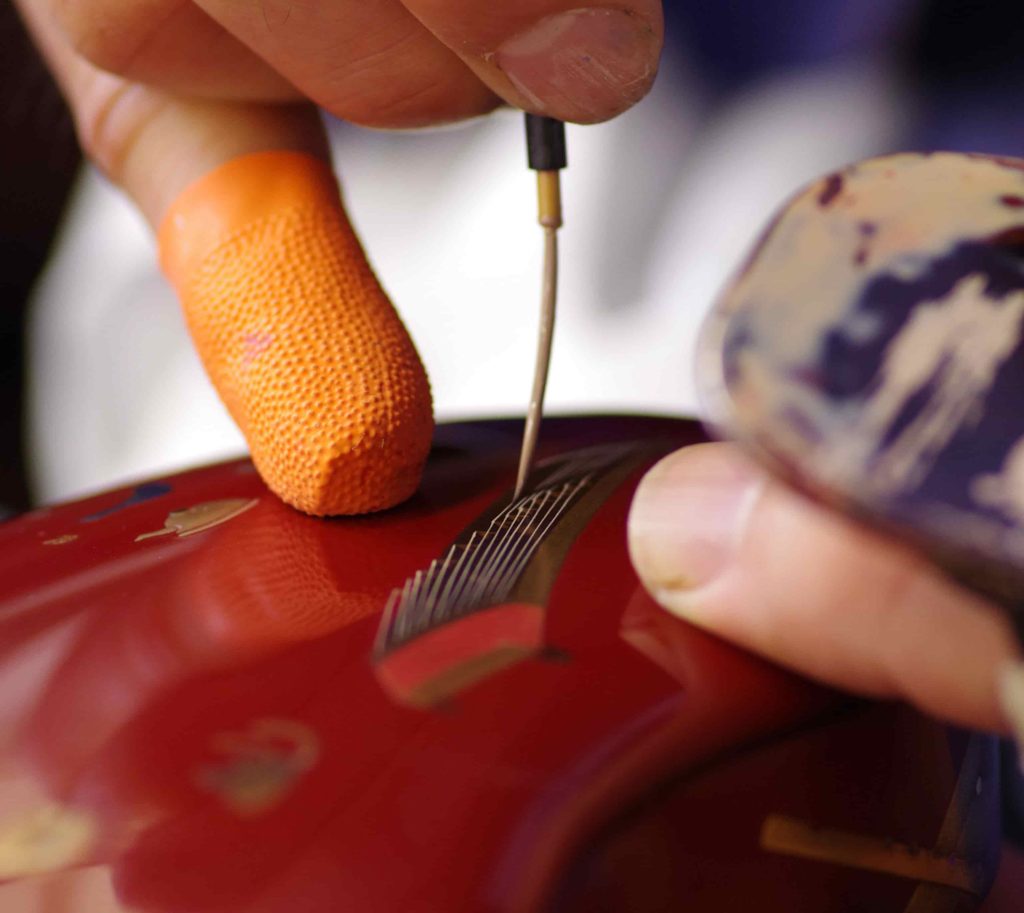
Junichi Hakose 箱瀬淳一 working on a fine maki-e  at Hakose Koubou 箱瀬工房. 
Fine lacquer line for maki-e (sprinkles of gold) expressing string of Japanese harp. He writes very fast without any base drawings.

In order fulfill the depth of the exhibition, Mr. Hakose was in his challenge to create further new world of  expression with maki-e decoration designs. He was especially challenging with maki-e theme under his big theme of Maki-e Past & Present.  Of course he had many of his standard maki-e design theme from his past original expressions, however that was not enough for the size of the challenge, also along with the passion to pave a new way.
Junichi Hakose 箱瀬淳一 Hakose Koubou  箱瀬工房 
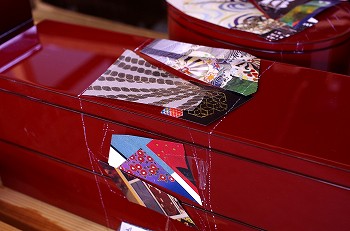
This is a target image to create with maki-e on the box. Inspirational motifs and colors cut out from magazines to create collage image onto his “Collage series” box.

So Mr. Hakose created several special new series. One was  called “Collage”, which is really a collage of images from past and present of  Japanese culture and lifestyles. He was actively working on this “Collage series” when we visited  his place.
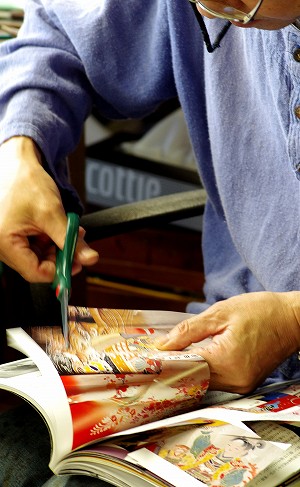
Junichi Hakose 箱瀬淳一 Hakose Koubou  箱瀬工房 
Mr. Hakose cutting out image and color samples, that inspires his mind, from magazines with lots of Japanese cultural historical information.


Mr. Hakose was a little nervous for  structuring collage images on each different piece.  Yes, you would understand why he was a little nervous when you see the created results using the cutout image. They were extremely extraordinary, which I think no one had ever seen such design maki-e lacquerware.  Such that one had alphabet words taken from an English newspaper and the other had just big number “2”and “1” in a Gothic type font in the middle of a box.
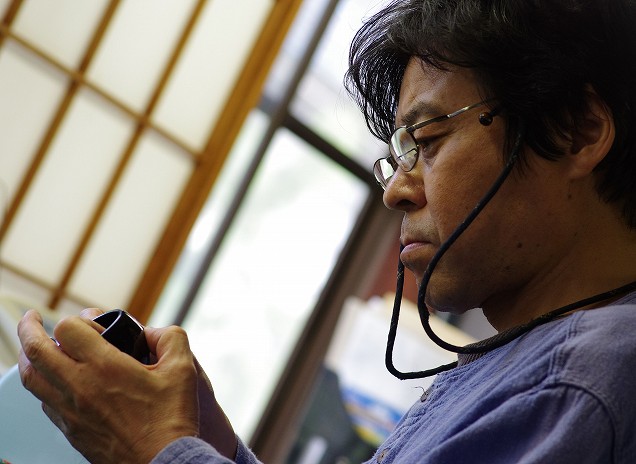
Junichi Hakose 箱瀬淳一 Hakose Koubou  箱瀬工房 
Mr. Junichi Hakose (箱瀬淳一)working on deciding a design of Collage series on a small round case.
Junichi Hakose 箱瀬淳一 working on maki-e for his box at Hakose Koubou 箱瀬工房. 
Mr. Junichi Hakose (箱瀬淳一) working on maki-e (sprinkles of gold) to create “Collage series ” box. Combination of the gold spiral and mat gray geometrical shape is unique!

Mr. Hakose swiftly works on his creations one by one; while guiding his several apprentices  how they should carry out the tasks he had given.

The “Collage series” was coming out in a very unique and modern way, like shown in right, with real new ways of expression in the lacquerware.


Although he had been preparing for this exhibition for more than three years with full speed, still he had many unfinished pieces left to decide the design and to do  maki-e decorations with the deadline being extremely close by.

Junichi Hakose 箱瀬淳一 Hakose Koubou  箱瀬工房 
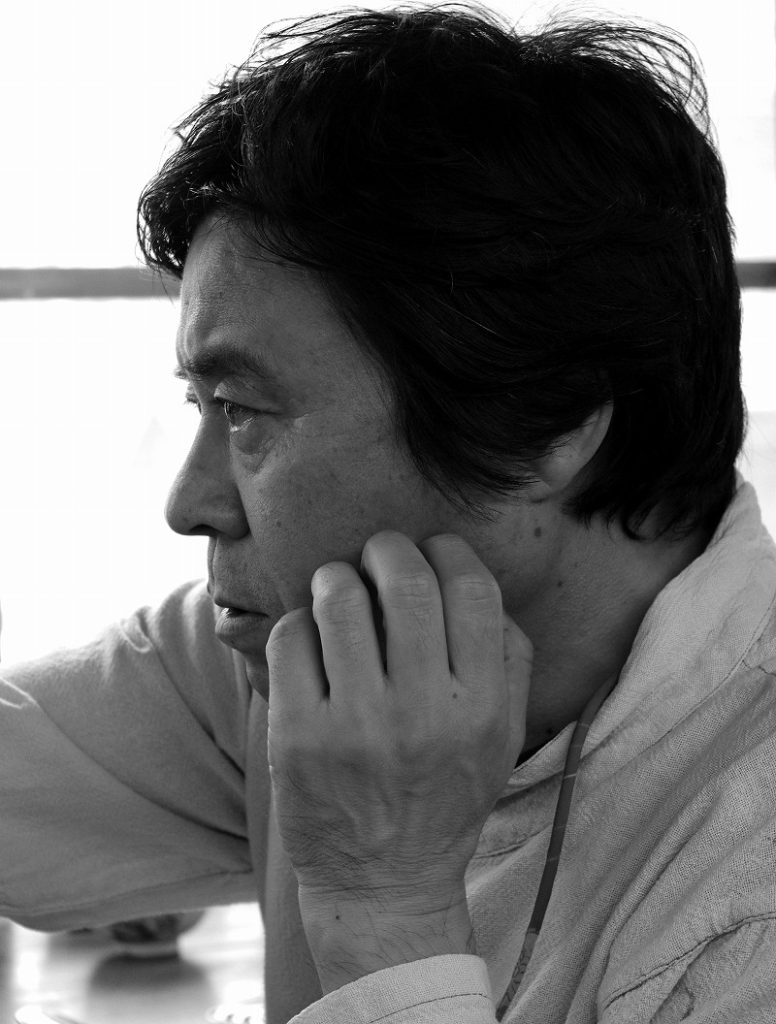
Master Junichi Hakose (箱瀬淳一). Thinking……..

However amazingly there was no compromise in his taking time to pursue and challenge the limit of his creativity without  any rushes.

He would stop working and gaze at the object with a stern look for a while and then start working again.


Mr.Hakose had another totally new series with a methodology that he had never tried before.  It was to use a free flow of colored urushi lacquer. In the world of painting it is very common to use free flow of liquid paint; however it is very uncommon in the lacquerware industry. It was also first time for us to see the methodology.
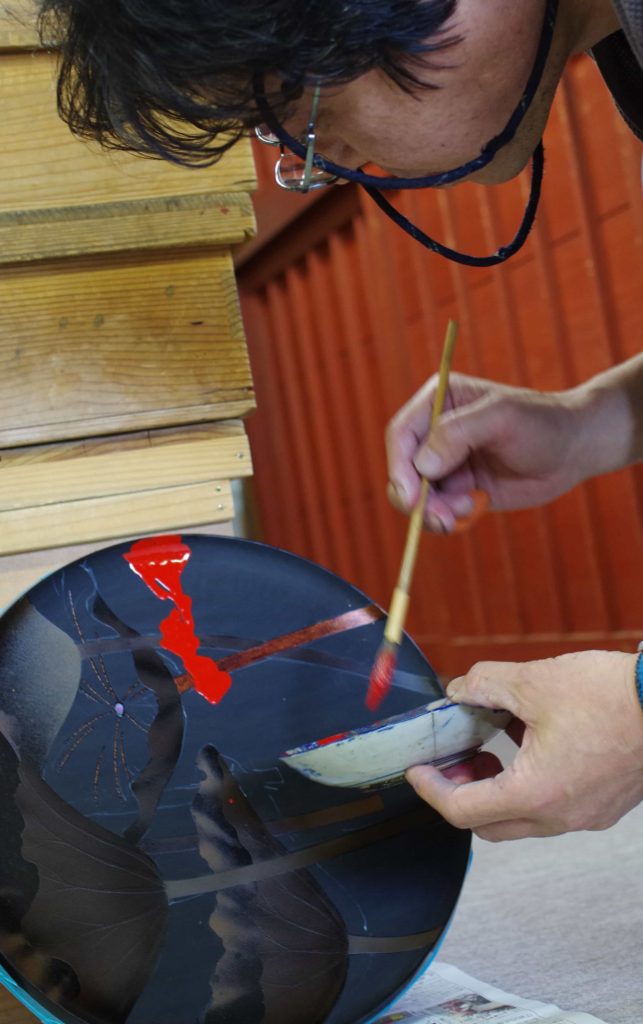
Junichi Hakose 箱瀬淳一 Hakose Koubou  箱瀬工房 
“Lotus Under the Sun” large round plate. Mr. Hakose (箱瀬) working on a free flow of red lacquer to express the reflection of the sunset on water.

Mr.Hakose was preparing several pieces of  large thick round plate with lotus on water design and he said that the free flows of red and blue colored lacquers are an expression of the sunset reflecting on the water.

After working on couple of plates of free flow red lacquers with couple of streaks from one direction each, he tried the next plate with one flow from one side and the other from the opposite side.
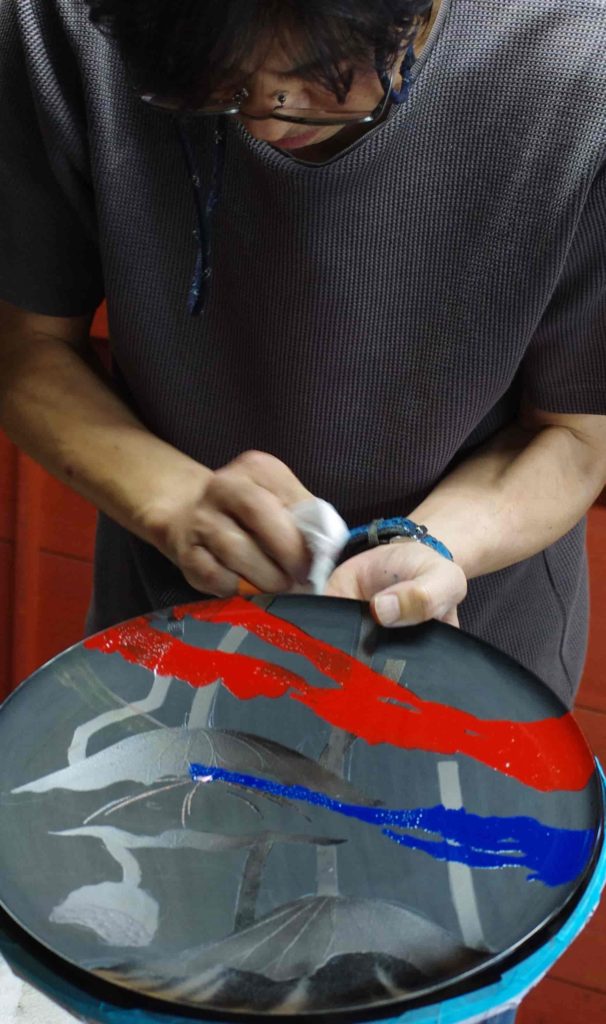


Junichi Hakose 箱瀬淳一 Hakose Koubou  箱瀬工房 
“Lotus Under the Sun” large round plate. Mr. Hakose (箱瀬) finishing edges of the reflection using free flow of red and blue colored lacquer.

At first, I thought that would mess up the whole impression. But, the result was not !

The dual direction one was the best piece. He also thought so and he was very happy with the result and said; “You never know unless you actually do, you need to try everything to get a better outcome!”. I agreed!

The pieces were very new and modern and looked good. However they still were expected to have many more processes before complete. Woo, still long way.
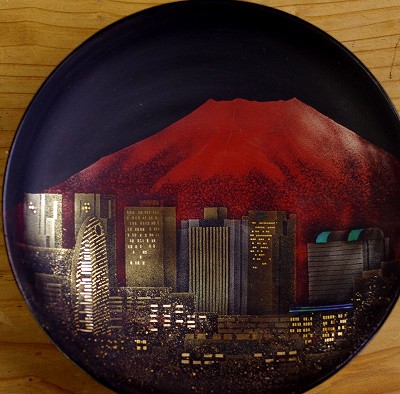
Unfinished plate for WAKO Exhibition (Hakose Koubou) Junichi Hakose 箱瀬淳一 Hakose Koubou  箱瀬工房 
Unfinished middle size plate for WAKO Exhibition. It is a piece from the special series for the exhibition “40 Sceneries of Tokyo (東京四十景) “

Cheers to Mr. Hakose’s  challenge!

Please keep up the excellent work!!

We will expect to see the WAKO Exhibition !!!
Hakose Koubou in Wajima    - 箱瀬工房 - 

Junichi Hakose is one of the most active and famous urushi lacquer work artist in the fine jewelry industry. He has done many works with Van Cleef & Arpels from 2004 and continuing since, and with  Chanel in 2015. His urushi lacquer works has been expressed in the jewelry lines or the watches for those jewelers for many years.  We as a fan of Master Hakose, we are happy that his superb works are welcomed and admired by the people all over the world.

Master Junichi Hakose (箱瀬淳一) Photo copyright: Kogei Styling. Japanese lacquer artist from Wajima Japan.
Master Junichi Hakose (箱瀬淳一) Photo copyright: Kogei Styling


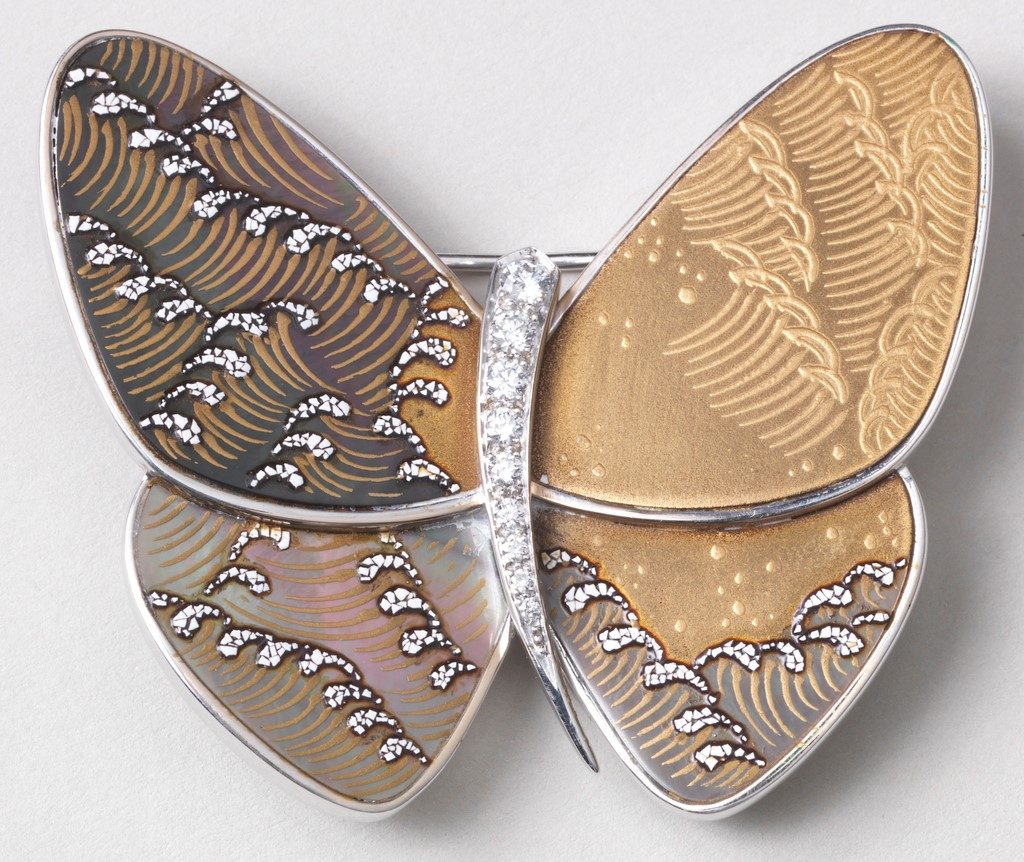
One example of his works with Van Cleef & Arpels could be seen in the collections of Cooper Hewitt, Smithsonian Design Museum in New York. You will be able to see the detailed works of Master Hakose’s maki-e works that are fine like a jewelry!

(No, sorry it’s a jewelry here.)

Araiso U Brooch, 2007. Designed and Made by Van Cleef & Arpels and Junichi Hakose (Lacquer), Paris, France and Japan. Gift of Van Cleef and Arpels. 2011-42-1. by Cooper Hewitt Museum,箱瀬淳一 ヴァンクリーフ&アーペル ブローチ
Araiso U Brooch, 2007. Designed and Made by Van Cleef & Arpels and Junichi Hakose Source: http://www.cooperhewitt.org/2013/04/28/butterflies-are-free-to-let-ones-spirits-fly/


We had been honored to do business with this extraordinary artist;  extremely humble and down to earth person, for several years since our start. So we had been lucky enough that we had many chances to visit his Studio / Work shop called Hakose Koubou in Wajima, the place where he was born and raised.

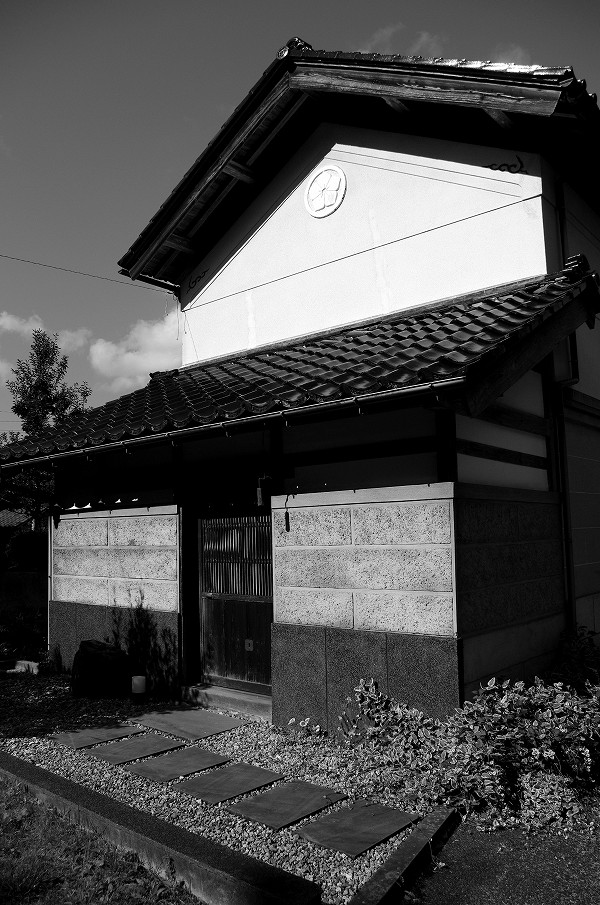
Hakose Kubuo (箱瀬工房) Old Kura (storage house) is suited place to do the fine urushi coatings. 箱瀬工房は,箱瀬淳一の漆芸が生み出される場所です。この蔵の2階が埃を嫌う上塗りに使われます。
Hakose Kubuo (箱瀬工房) Old Kura (storage house) is suited place to do the fine urushi coatings.

He uses his kura (storage house)  from his family, to create his works. Since this kura (蔵) is one of the most suited place to do the urushi  coating in Japan. Kura’s original purpose is to preserve and protect important fine items of your family. It is made with stones and stucco to withstand the natural condition and fire. Therefore the inside has relatively stable temperature and humidity condition in all seasons also shutting the dust out.  Wisdom from the history!

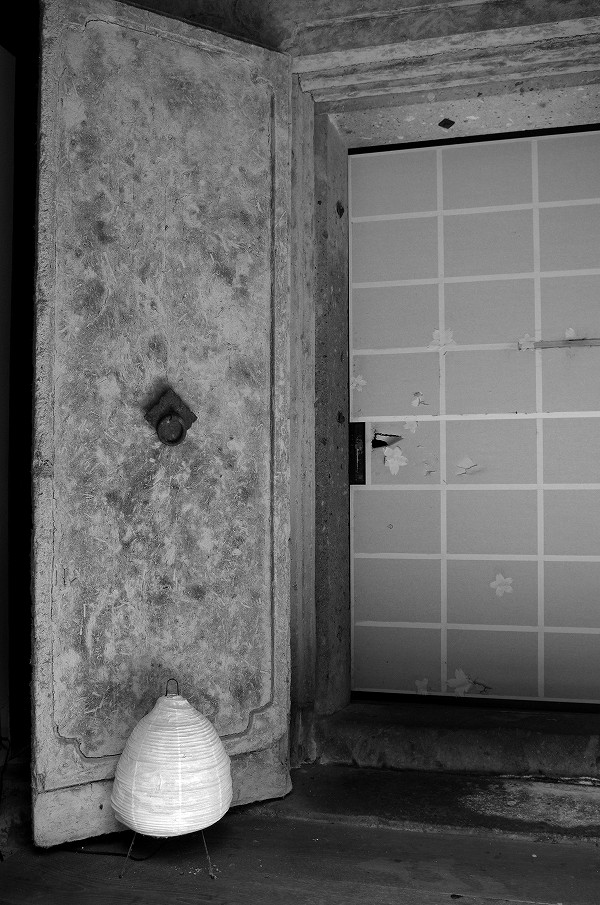
Entrance of kura (蔵); Hakose Koubou (箱瀬工房). Junichi Hakose his lacquer works in this Kura. 箱瀬淳一漆芸の生み出される工房です。
Entrance of kura (蔵); Hakose Koubou (箱瀬工房)
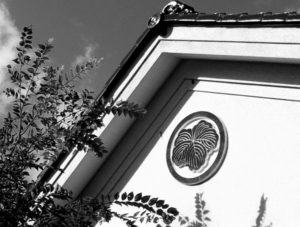
Another of his Kuras(蔵) with his family symbol(家紋). Hakose Koubou (箱瀬工房). Family symbol of Junichi Hakose on his family storage house.
Another of his Kuras(蔵) with his family symbol(家紋). Hakose Koubou (箱瀬工房)

We hope that you would have some feeling of his background of creations though a glimpse of his history and the tradition with the nature of Wajima.


Where the true beauties are created.

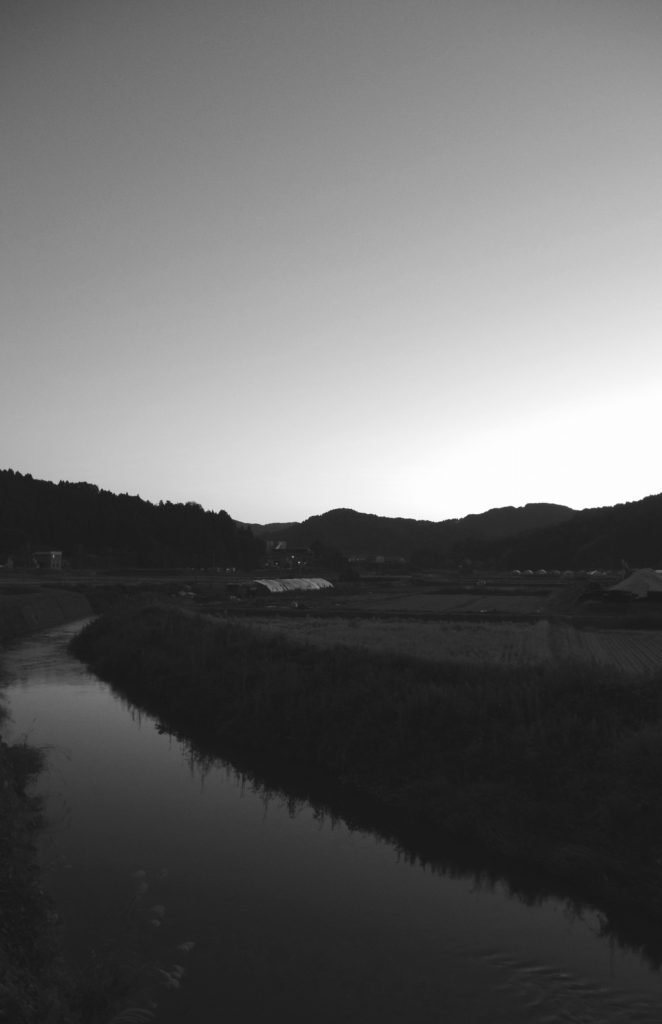
Beautiful scenery of Wajima (輪島). Fugeshi River (鳳至川) runs just in front of Hakose Koubou.